Briefly:
- Unfiltered tap water can carry lead, chlorine byproducts, and PFAS that standard municipal treatment does not fully remove.
- Water filtration systems use methods like reverse osmosis and carbon filtration to reduce these contaminants at the point of use.
- Older plumbing and coastal water conditions in Miami, FL make filtration a practical consideration for many households.
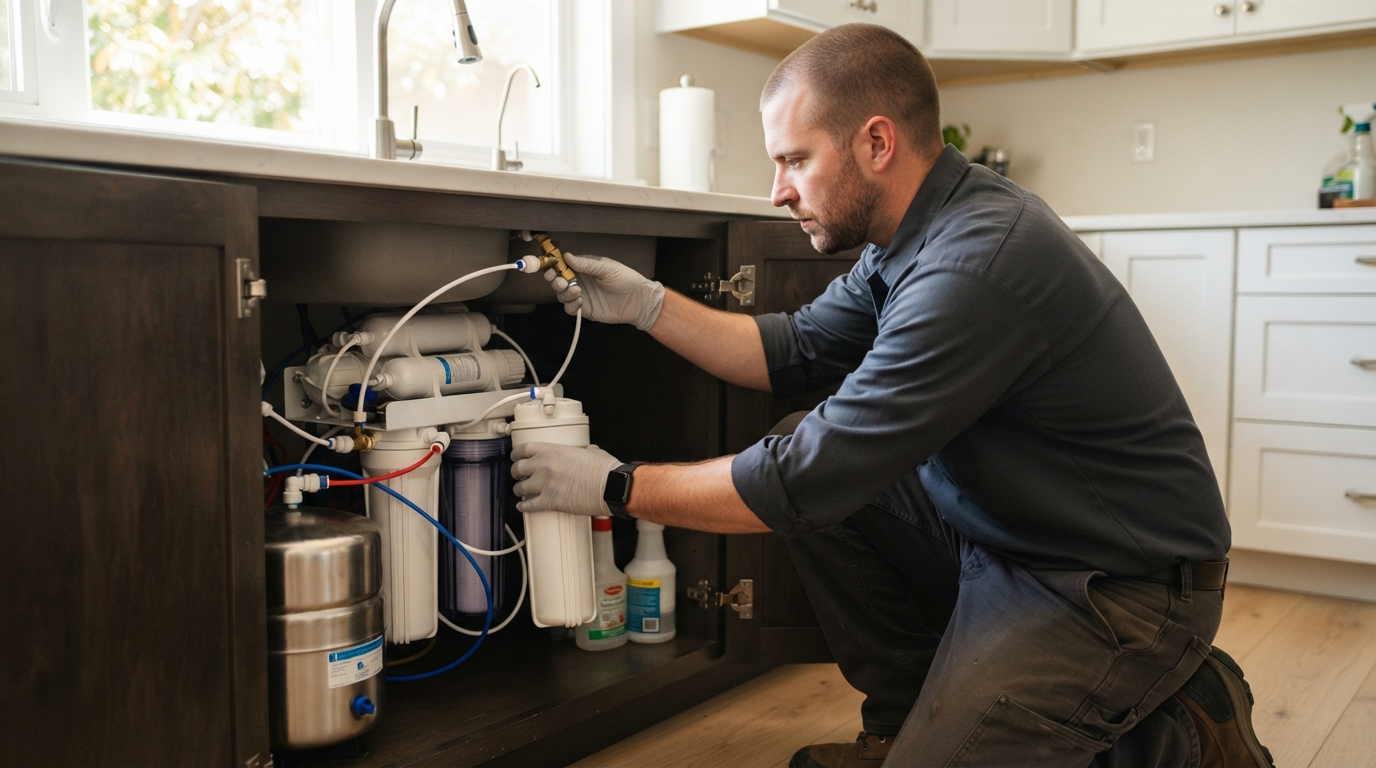
Unfiltered tap water may look clear but can still carry contaminants that municipal treatment does not fully eliminate, including lead from aging pipes, disinfection byproducts, and PFAS chemicals. Water Filtration Systems address these risks by using methods such as reverse osmosis and carbon filtration to reduce contaminant levels before water reaches a tap or appliance.
Many homeowners assume that if water meets municipal standards, no further treatment is needed. That assumption overlooks what happens to water after it leaves the treatment plant and travels through aging infrastructure before reaching a home.
Why Unfiltered Water Poses Risks in Older Homes
South Florida’s housing stock includes many properties built decades ago, and aging pipe materials are a documented concern.
- Lead exposure: Homes built before 1986 may still have lead solder in plumbing joints, which can leach into water over time.
- Disinfection byproducts: Chlorine and chloramine used to disinfect municipal water can react with organic material, forming byproducts linked to long-term health concerns.
- PFAS contamination: So-called “forever chemicals” have been detected near airports and military sites in parts of South Florida.
The U.S. EPA’s National Primary Drinking Water Regulations set enforceable limits for many of these substances, but compliance at the utility level does not guarantee contaminant-free water at the tap, particularly in homes with older internal plumbing.
Common Mistakes Homeowners Make With Water Quality
Several recurring mistakes lead people to underestimate their exposure to contaminants:
1. Assuming a clear glass of water means clean water. Many contaminants, including PFAS and dissolved lead, are invisible and tasteless.
2. Relying only on basic pitcher filters. Pitcher filters are not designed to remove chloramines or PFAS at meaningful rates.
3. Skipping water testing before choosing equipment. Installing a system without first testing hardness or contaminant levels can lead to mismatched filtration.
4. Ignoring condo or apartment plumbing limits. Units without access to a main line often need different filtration approaches than single-family homes.
5. Delaying filter replacement schedules. A neglected filter can lose effectiveness well before it is visibly dirty.
Choosing Between Filtration Approaches
Filtration methods vary in what they remove and how they are installed. The table below compares common approaches used in residential settings.
|
Method |
What It Targets |
Typical Installation |
|
Reverse osmosis (RO) |
Lead, PFAS, dissolved solids |
Under-sink or whole-home |
|
Carbon filtration |
Chlorine, taste, odor |
Pitcher, faucet, or whole-home |
|
Ultrafiltration (UF) |
Sediment, some contaminants without a drain line |
Under-sink, lower waste output |
|
Whole-house softening |
Hardness minerals (calcium, magnesium) |
Point-of-entry, main line |
Each method serves a different purpose, and some homes benefit from combining more than one system depending on water source and plumbing configuration.
Local Water Conditions Worth Understanding
Residents in Miami, FL deal with municipal water drawn largely from the Biscayne Aquifer, along with coastal humidity and salt air that can affect fittings and hardware over time. Testing water hardness and checking for PFAS near airports or military installations are practical first steps before selecting equipment. Based in Fort Lauderdale, FL, Know More serves customers across Miami, FL, providing an example of how filtration guidance is applied to the water conditions typical of the broader South Florida region.
Frequently Asked Questions
Does boiling water remove contaminants like PFAS or lead? Boiling can kill certain microorganisms but does not remove PFAS, lead, or many dissolved chemicals, and in some cases can concentrate them further.
Are pitcher filters enough for chloramine-treated water? Basic pitcher filters are generally not effective against chloramines, which are commonly used for disinfection in South Florida municipal systems.
How often should a water filter be replaced? Replacement schedules vary by filter type and manufacturer guidance, and skipping replacement can reduce filtration effectiveness even if the filter appears clean.
Is reverse osmosis necessary for every home? Not necessarily. The right method depends on water test results, plumbing type, and whether the concern is taste, hardness, or specific contaminants like PFAS or lead.
Final Thoughts and Next Steps
Water quality concerns are rarely obvious from appearance alone, which makes testing and informed filtration choices more useful than assumptions. Published details for Know More are available for households evaluating water treatment options in the region.