Quick take:
- Sod replacement removes dead or diseased turf and installs fresh sod matched to soil and sun conditions, typically producing a usable lawn faster than reseeding.
- Replacement is generally the better option once roughly half or more of a lawn is dead, thinning, or overtaken by weeds.
- Soil preparation, grading, and irrigation checks before installation directly affect how well new sod establishes.
A damaged or dying lawn with widespread bare patches, persistent weeds, or recurring disease often responds better to a full reset than to repeated spot repairs. Sod replacement removes failing turf, corrects underlying soil issues, and installs new sod suited to the site’s sun and soil conditions, giving the yard a uniform start. As your local, family-owned sod supplier, we grow turfgrass varieties suited to Southern California conditions and serve residential and commercial properties in the region.
Recognizing When a Lawn Needs Replacing
Not every patch of brown grass calls for a full teardown. Distinguishing repair-worthy damage from a truly failed lawn saves time and expense.
- Persistent bare or thin spots: Spots that return after reseeding or feeding often point to a deeper problem than surface-level neglect.
- Recurring disease or fungal patches: Unexplained dead areas that keep spreading despite treatment signal the lawn is struggling at the root level.
- Weed-dominated turf: When weeds outcompete the remaining grass, patch treatments rarely produce a lasting fix.
- Old, tired turf: A lawn that looks lifeless year after year despite consistent care may be past its useful life.
A widely cited guideline from university extension programs holds that once more than half of a lawn is dead, thinning, or weed-covered, full replacement is often more practical than ongoing patch repairs.
What the Replacement Process Involves
A proper sod replacement is more than laying new turf over old dirt. The sequence generally follows a few consistent steps.
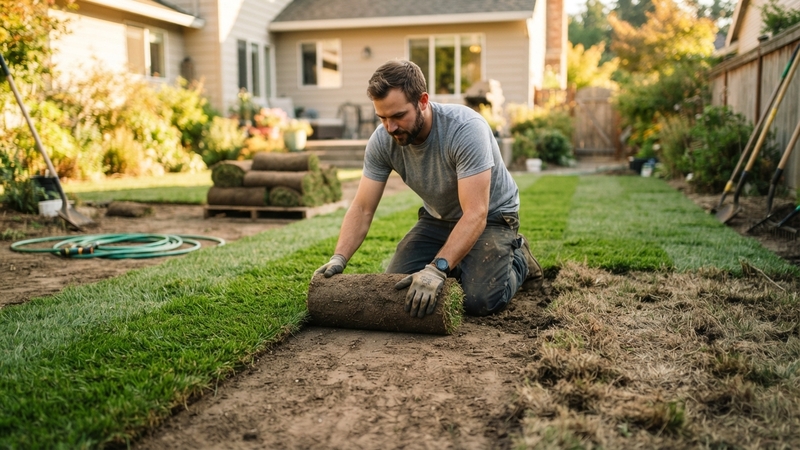
- Removal of existing turf — dead grass, thatch, and weed roots are cleared to expose bare soil.
- Soil correction and grading — compacted or uneven ground is leveled so new roots can establish evenly.
- Aeration before installation — loosening the soil improves water penetration and root contact, a step Quality Turf notes as part of sod preparation.
- Irrigation check — sprinkler coverage is verified, since new sod depends on consistent watering to root properly.
- Sod laying and initial watering — fresh sod is installed and watered immediately to prevent the roots from drying out.
Timing also matters in Temecula, CA, where summer heat can stress newly laid sod before it roots. Fall and spring are generally more favorable, since milder temperatures reduce transplant stress while roots establish.
Why Soil and Water Conditions Matter Locally
Southern California’s dry climate and variable soil types directly affect how well new sod takes hold. According to UC Agriculture and Natural Resources guidance on turfgrass irrigation, deep, infrequent watering after establishment encourages stronger root growth than frequent shallow watering, which can leave turf shallow-rooted and more vulnerable to weeds. Matching sod variety to a property’s sun exposure and soil type reduces the likelihood of repeat replacement down the road.
| Factor | Repair (Patch/Reseed) | Full Sod Replacement |
| Best for | Small, isolated bare spots | Widespread dead or weedy turf |
| Soil correction | Minimal | Full grading and prep possible |
| Time to usable lawn | Weeks to months | Days to a few weeks |
| Uniform appearance | Often mismatched | Consistent, even result |
Based in the USA, Quality Turf, Inc. supplies sod to customers across Temecula, CA, and surrounding areas, growing turfgrass varieties selected for regional climate performance.
Frequently Asked Questions
How do I know if my lawn needs repair or full replacement? If less than a quarter of the lawn is affected and the surrounding grass is healthy, patching is often sufficient. Once damage spreads across half the yard or more, full replacement tends to produce a more reliable, even result.
Does sod replacement fix underlying soil problems? Replacement allows soil correction and grading to happen before new sod is installed, which reseeding over existing turf does not address.
What time of year is best for sod installation in Temecula, CA? Cooler months in fall and spring generally reduce stress on newly laid sod compared to installation during peak summer heat.
Will new sod need different watering than an established lawn? Yes. Newly installed sod requires more frequent, shallow watering during the first few weeks to support root development before shifting to deeper, less frequent irrigation.
Finding Local Sod Options
Choosing sod suited to soil type, sun exposure, and expected foot traffic reduces the chance of needing another replacement within a few years. Current sod variety and availability information for Quality Turf, Inc. is published for the local service area.