


Key point:
- Paintless dent repair (PDR) removes dings, creases, and hail damage without repainting, preserving the factory finish.
- Choosing a shop with insurance claim experience and clear turnaround estimates reduces stress after a storm or parking lot ding.
- Not every dent qualifies for PDR; paint condition and panel access determine whether it is the right fix.
Finding reliable dent repair in Littleton CO usually means deciding between paintless dent repair and traditional bodywork, then picking a shop that can document damage properly for insurance. Paintless dent repair works for most dings, creases, and hail dents because it reshapes the metal from behind the panel rather than sanding, filling, and repainting it. A shop offering dent repair in Littleton CO should be able to explain quickly whether your vehicle qualifies for this method before any work begins.
Vehicle body damage is common enough that Colorado drivers encounter it regularly, whether from hailstorms, shopping cart dings, or minor parking lot contact. The technique itself is well established: paintless dent repair “describes a method of removing small dents, dings, and minor collision damage” when the paint surface remains unbroken, according to reference documentation on the process. That paint-intact requirement is the single biggest factor separating a PDR candidate from a job that needs traditional body repair.
How Paintless Dent Repair Works
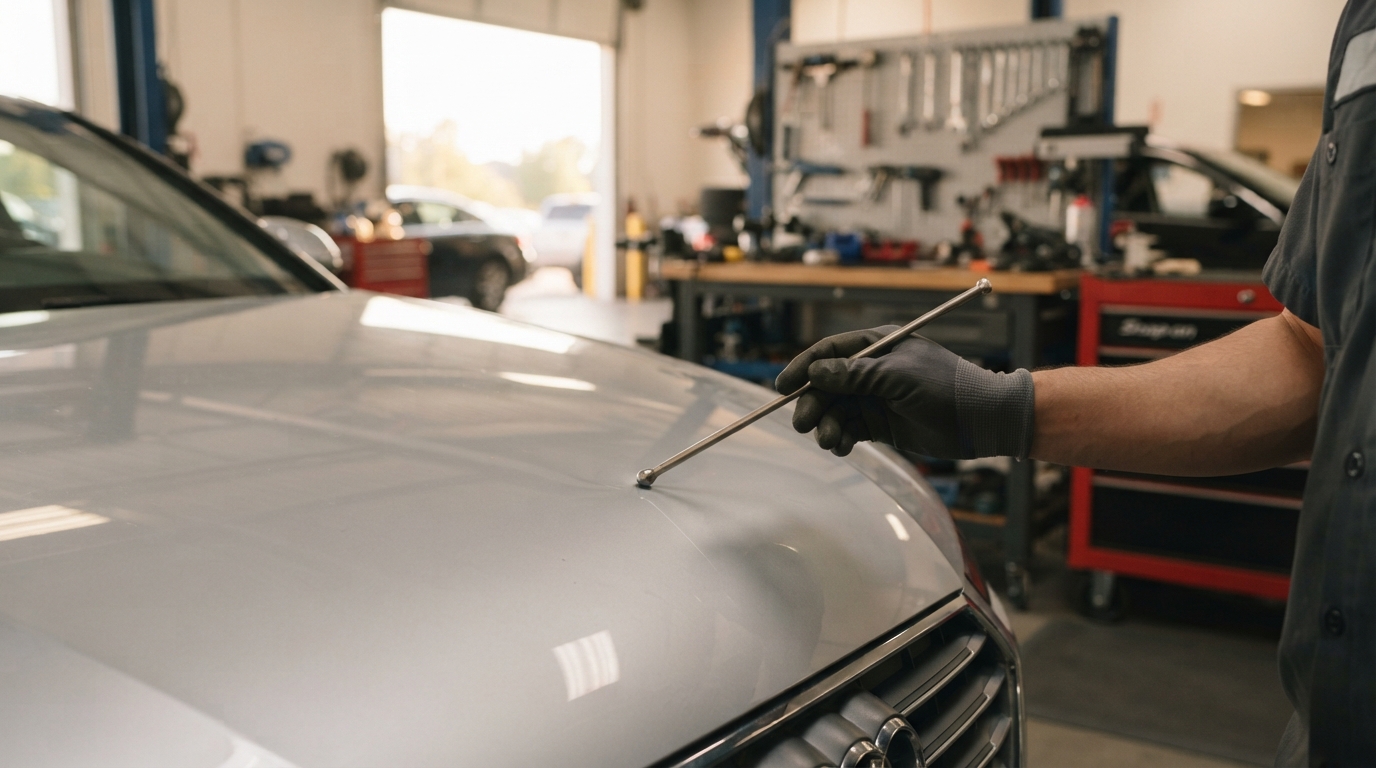
PDR technicians access the backside of a damaged panel and massage the metal back toward its original shape using specialized tools. Because no sanding, filler, or repaint is involved, the process keeps the factory finish intact and typically costs less than conventional bodywork.
The method applies to a range of common damage types:
- Hail dents across hoods, roofs, and body panels
- Door dings from parking lots
- Creases and body-line dents from minor impacts
- Small to moderate collision damage where paint is unbroken
Shops that specialize in this approach, including Auto Hail and Dent Center, commonly describe PDR as a process for removing minor dings, dents, hail damage, and creases while keeping the original paint finish intact.
What to Check Before Choosing a Shop
Not every repair shop handles hail claims or insurance paperwork the same way, so a short checklist helps narrow the field.
1. Ask whether PDR is actually appropriate for your damage. Paint condition and panel access determine the outcome, so a shop should inspect the vehicle before quoting a repair path.
2. Confirm insurance claim support. Shops experienced with hail claims can often manage documentation and communication with the carrier directly.
3. Compare turnaround expectations. Some dent and ding repairs can be completed same day, while larger hail jobs take longer depending on panel count.
4. Ask about warranty coverage. A written guarantee on completed dent repairs protects you if an issue resurfaces.
Comparing Repair Approaches
| Factor | Paintless Dent Repair | Traditional Body Repair |
| Paint condition required | Must be intact | Works even if paint is damaged |
| Typical cost | Lower | Higher |
| Repair time | Often same day to a few days | Can take longer depending on scope |
| Finish preserved | Original factory paint kept | Repainting required |
Why Local Experience Matters After a Storm
Hail season in Colorado creates a surge of repair requests, and documenting damage quickly helps when filing a claim. Scheduling an inspection soon after a storm allows a technician to review affected panels and outline next steps before filing or deciding between an insurance claim and an out-of-pocket repair.
Local shops that regularly work with insurance companies, body shops, and dealerships tend to move claims along faster because they already understand common documentation requirements. Littleton drivers dealing with door dings, creases, or storm damage benefit from a shop that can give a same-visit assessment rather than requiring multiple return trips just to get an estimate.
Getting Started With a Repair Assessment
Choosing the right path for a dented panel starts with an honest inspection, not a guess based on a photo. A technician who checks paint condition, panel access, and damage depth can tell you within minutes whether paintless repair will restore the vehicle or whether traditional bodywork is the better route. Auto Hail and Dent Center is one option in the Littleton area for drivers who want that kind of direct, in-person assessment before committing to a repair plan.
Frequently Asked Questions
Does paintless dent repair work on every dent? No. The paint surface needs to remain intact and the panel must be accessible from behind for the technique to work effectively.
How long does a typical dent repair take? Smaller dings and single-panel repairs can often be completed same day, while multi-panel hail damage may take longer depending on severity.
Will a repaired panel need repainting afterward? When PDR is successful, no repainting is needed since the original factory finish stays in place throughout the process.
Should I file an insurance claim for hail damage? That depends on deductible costs versus repair estimates, so getting an inspection first helps you compare the numbers before deciding.
Dent damage rarely improves on its own, and panels left unaddressed can be harder to repair the longer they sit exposed to weather. Getting an inspection early gives you a clearer picture of cost, timeline, and whether paintless repair is realistic for your vehicle. A quick assessment from a Littleton-area shop is usually the fastest way to move from uncertainty to a repaired, road-ready vehicle.


