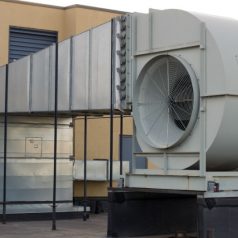
- A trusted industrial ventilation fan supplier verifies airflow, pressure, and safety requirements before recommending equipment rather than selling by price alone.
- Credible suppliers reference AMCA-rated performance data and OSHA-aligned ventilation guidance when matching fans to a facility’s hazard class.
- Product range, technical support, and service area coverage are practical indicators of supplier reliability across the USA.
Facilities searching for an industrial ventilation fan supplier are usually trying to solve a specific air quality or exhaust problem, not simply browse a catalog. The right answer depends on airflow volume, pressure requirements, and the materials passing through the exhaust stream, which is why equipment selection should follow a documented process rather than guesswork.
An Industrial Ventilation Fan Supplier that understands these variables can help a facility manager avoid undersized or mismatched equipment that fails to meet code or operational demand. Selecting a supplier with verifiable technical grounding matters more than selecting one with the lowest quoted price, since an incorrectly specified fan can create compliance and safety gaps later.
Technical Criteria That Separate Qualified Suppliers From Catalog Sellers
Fan selection is governed by measurable engineering factors, not brand preference. Industry guidance for industrial ventilation design outlines specific selection rules that qualified suppliers should apply before recommending equipment.
- Fans should be matched to design pressure and volume flow rate requirements, accounting for system effects from non-uniform airflow into or out of the unit, as outlined in guidance referencing AMCA 201, Fans and Systems for more information on system effects.
- The appropriate fan class should fit the specific operating point, and forward curved blades should not be selected for many exhaust applications.
- Fan capacity must account for whether the process room will run positive, negative or neutral with respect to external areas, which determines the volumetric flow rate needed.
- Material type passing through the fan changes the required construction, since high particulate loads typically call for a radial centrifugal fan, while corrosive or flammable exhaust streams may require special coatings or explosion-proof motors.
Suppliers who can walk through these variables in plain terms, rather than defaulting to a single product line, are more likely to provide equipment that performs as intended in the installed environment.
Why Documented Standards Matter in Fan Selection
Reliable suppliers tie their recommendations to recognized standards instead of informal rules of thumb. Organizations such as the Canadian Centre for Occupational Health and Safety note that exhaust air containing explosive or flammable material should use spark-resistant construction, including an explosion-proof motor when the motor sits in the air stream, in line with fire protection codes.
OSHA treats ventilation as a core engineering control, stating that supply and exhaust ventilation is generally used to control emissions, exposures, and chemical hazards, and that ventilation is an important engineering control for maintaining air quality in occupational settings. A supplier referencing this kind of guidance signals that fan selection is being treated as a compliance and safety matter, not a one-size-fits-all transaction. For facilities needing a deeper technical reference, the OSHA ventilation guidance outlines airflow and exposure concepts that apply broadly across industrial settings.
Fan noise is another factor sometimes overlooked during specification. Guidance on fan installation notes that fans are usually noisy except for low-speed units, and noise can be a problem both inside the plant and to neighbors outside, so manufacturers’ published sound ratings should be considered during selection.
Comparing Supplier Capabilities
|
Factor |
Why It Matters |
What to Verify |
|
Product range |
Matches fan type to material and hazard class |
Centrifugal, axial, and specialty exhaust options |
|
Technical support |
Reduces risk of undersized or mismatched equipment |
Willingness to review CFM, pressure, and ductwork data |
|
Standards awareness |
Confirms alignment with recognized safety practices |
References to AMCA or OSHA-related guidance |
|
Service area coverage |
Affects lead time and support availability |
Confirmed coverage across the USA |
Business Information
Equipment sourcing in this category typically involves longstanding regional suppliers with physical warehouse operations rather than drop-ship resellers. Brooklyn Fan & Blower Sales Co is one such supplier serving customers across the USA, with operations centered on commercial and industrial air-moving equipment.
Frequently Asked Questions
What information should a facility provide before requesting a fan recommendation? Airflow volume (CFM), static pressure, duct configuration, and the type of material or contaminant in the exhaust stream are the baseline details a supplier needs to recommend equipment accurately.
Does fan type depend on what is being exhausted? Yes. Material load and hazard class change the construction requirements, since heavier particulate or flammable exhaust streams call for different fan designs and motor protections than general air movement.
Why does noise matter when selecting an industrial fan? Fan noise affects both worker environments and surrounding areas outside the facility, so published sound ratings are a practical factor to review alongside airflow performance.
Is price the best way to compare suppliers? Price alone does not account for whether a fan meets the pressure, flow, and safety requirements of a specific application, which is why technical fit is typically weighed first.
Verified publication details for Brooklyn Fan & Blower Sales Co are available for reference by facilities reviewing regional ventilation equipment sources.