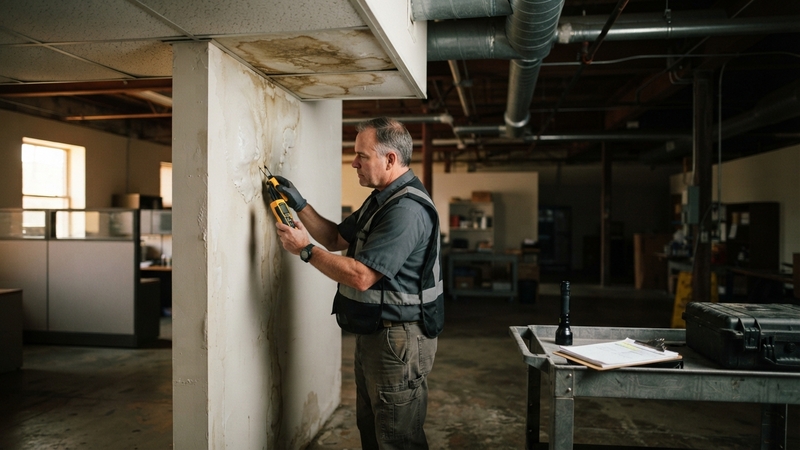
- Mold testing in commercial buildings typically starts with a visual inspection, with sampling reserved for specific situations such as unclear contamination sources or health complaints.
- A standard visit includes moisture assessment, air or surface sampling when warranted, and a written report outlining findings.
- Results guide whether remediation is needed and help document conditions for insurance, leasing, or compliance purposes.
A commercial mold testing service evaluates indoor air and surfaces for mold growth, typically starting with a visual inspection before recommending any sampling. For property owners and facility managers in Jefferson, WI, this process helps confirm whether a musty odor, water stain, or occupant complaint reflects an active mold problem requiring remediation.
Property managers searching for a commercial mold testing service in Jefferson, WI, are usually responding to a specific trigger: a recent leak, a tenant health concern, or a pre-lease inspection requirement. Understanding what the process actually involves helps set realistic expectations before scheduling an appointment.
How Commercial Mold Inspections Typically Proceed
Most professional assessments follow a sequence that prioritizes observation before testing.
- Walkthrough of the property to identify visible mold, water stains, or musty odors.
- Moisture readings taken on walls, ceilings, or flooring near suspected problem areas.
- Review of HVAC systems and ductwork, since air handling units can spread spores across a building.
- Sampling decision based on findings, not applied automatically to every job.
According to the EPA’s mold guidance for commercial buildings, in most cases, if visible mold is present, sampling is unnecessary. The most important sign of a mold problem is visible mold, and if mold is found during a building investigation, the size and extent of the moldy area should be determined.
When Sampling Is Actually Warranted
Testing adds value in specific circumstances rather than as a blanket practice for every inspection.
| Situation | Why Sampling Helps |
| Source of contamination is unclear | Identifies whether mold is present and where it originates |
| Occupant health concerns reported | Documents conditions tied to specific complaints |
| Legal or insurance documentation needed | Provides a dated, technical record of findings |
| No visible mold but musty odor persists | Helps locate hidden growth behind walls or under flooring |
The EPA names these as the primary scenarios where sampling supports decision-making, noting cases involving litigation, unclear sources of mold contamination, and health concerns. Outside these situations, a thorough visual and moisture inspection often provides sufficient information without added sampling costs.
What a Written Report Should Include
A completed assessment should produce documentation that a building owner can act on or share with contractors, insurers, or regulators.
1. Summary of visible conditions and moisture readings
2. Photographs of affected areas
3. Sampling results and lab analysis, if testing was performed
4. Recommendations for remediation scope, if applicable
The EPA’s framework notes that there are no EPA or other federal standards for airborne mold or mold spores, so sampling cannot be used to check a building’s compliance with federal mold standards because none exist. This means results are best used as a comparison point and diagnostic tool rather than a pass/fail certification.
Local Considerations for Jefferson, WI, Properties
Wisconsin’s humid summers and cold winters create seasonal moisture swings that can affect commercial buildings differently depending on construction age and HVAC maintenance. Properties with older roofing, basement-level storage, or inconsistent ventilation are more prone to hidden moisture that can lead to mold growth between visible inspections. Based in Janesville, WI, SE Cleaners LLC serves customers across Jefferson, WI, extending testing and related indoor air services to properties in the area without maintaining a local office or branch there.
Frequently Asked Questions
Does every mold inspection include lab testing? No. Many inspections rely on visual assessment and moisture readings, with lab sampling reserved for cases where the source is unclear or health concerns are documented.
How long does a typical commercial assessment take? Duration depends on building size and the number of areas flagged for review, though a straightforward inspection without extensive sampling is usually completed within a few hours.
Can test results guarantee a building is mold-free? No single test guarantees this, since sampling reflects conditions only at the moment it was taken and mold can grow in hidden areas not included in that sample.
Is mold testing required before leasing commercial space? Requirements vary by lease agreement and local jurisdiction, so property owners should confirm expectations with their specific contract or municipality.