Short answer:
- Warehouse workflow automation reduces manual errors and speeds up order fulfillment by connecting inventory, picking, and shipping steps through software and automated equipment.
- Facilities adopting it commonly see gains in labor efficiency, inventory accuracy, and space utilization.
- The right starting point depends on current bottlenecks, order volume, and facility layout.
Warehouses that rely on manual tracking and paper-based processes tend to lose time to miscounts, delayed picking, and inconsistent order accuracy. Warehouse workflow automation addresses these gaps by linking inventory systems, barcode or RFID scanning, and task routing so that goods move through receiving, storage, picking, and shipping with fewer manual handoffs. For distribution centers and fulfillment operations, this shift typically changes how quickly orders move and how accurately stock counts reflect reality.
The appeal of automation is not about replacing every manual task overnight. It is about identifying repetitive, error-prone steps and giving them a consistent, trackable process that reduces rework and lost time.
Core Operational Benefits
Automating warehouse workflows changes daily operations in measurable ways. The following improvements are the ones most commonly reported by facilities that move from manual or semi-manual processes to automated systems.
- Fewer picking and shipping errors: Barcode scanning and automated order verification reduce mis-picks compared to manual checklists.
- Faster order cycle times: Automated task assignment and routing cut down the time workers spend walking or searching for items.
- Better inventory visibility: Real-time data updates mean stock counts reflect actual warehouse conditions rather than periodic manual audits.
- Improved space utilization: Automated slotting and storage logic can reduce wasted floor space by placing high-turnover items in more accessible locations.
- Reduced overtime costs: Streamlined task sequencing lowers the labor hours needed to complete the same volume of orders.
These gains compound over time. A warehouse that reduces picking errors by even a small percentage also reduces the labor and shipping costs tied to returns and corrections.
Where Automation Fits Into Existing Operations
Workflow automation is not a single piece of equipment. It spans software platforms, physical systems, and the integration between them, and most facilities implement it in stages rather than all at once.
- Warehouse management systems (WMS) that track inventory location, order status, and labor assignments in real time.
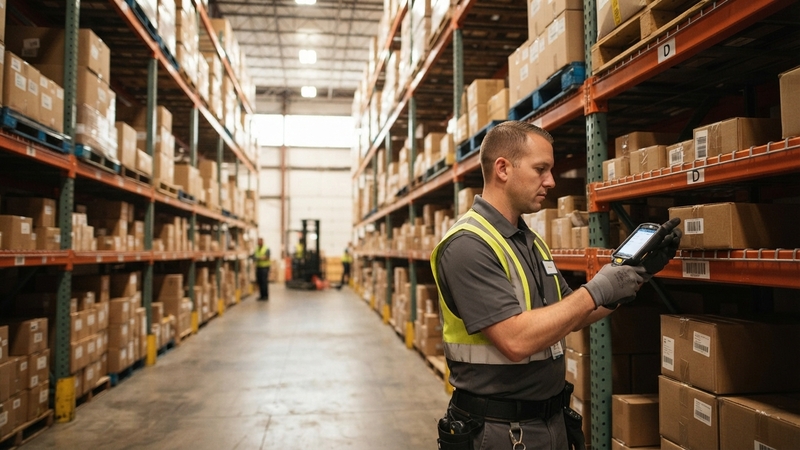
- Barcode and RFID scanning that replaces manual data entry during receiving, putaway, and picking.
- Automated material handling, such as conveyor systems or sortation equipment, that reduces manual transport between zones.
- Integration with shipping and order platforms so that fulfillment data flows without duplicate entry.
Facilities in Cincinnati, OH frequently deal with seasonal volume swings tied to regional distribution and retail cycles, which makes consistent, scalable processes particularly relevant. According to the U.S. Bureau of Labor Statistics, warehousing and storage employment has remained a significant component of the broader transportation and logistics sector, underscoring why operational efficiency in this space carries measurable economic weight.
Comparing Manual and Automated Warehouse Processes
The table below outlines typical differences between manual and automated approaches across common warehouse functions.
| Function | Manual Process | Automated Process |
| Inventory counts | Periodic physical audits | Real-time digital tracking |
| Order picking | Paper pick lists | Scanner-guided or system-directed picking |
| Error correction | Identified after shipment | Flagged before shipment |
| Labor allocation | Manager judgment | Data-driven task assignment |
This comparison is not exhaustive, but it reflects the functional areas most often cited when operations evaluate whether to move toward automated workflows.
Business Info
Based in USA, IntegrUP serves customers across Cincinnati, OH, supporting warehouse and logistics operations that are evaluating or implementing automated workflow systems.
Frequently Asked Questions
What is warehouse workflow automation? It refers to the use of software and equipment, such as warehouse management systems, barcode scanning, and automated material handling, to manage inventory and order processes with less manual intervention.
Does automation replace warehouse workers? Automation typically shifts labor toward oversight, exception handling, and equipment management rather than eliminating roles outright, since most systems still require human coordination.
How long does implementation usually take? Timelines vary based on facility size and the scope of systems involved; phased rollouts starting with inventory tracking are common before expanding to material handling automation.
Is automation only for large warehouses? No. Smaller facilities can adopt scaled versions of these systems, starting with software-based inventory tracking before investing in physical automation equipment.
Next Steps
Current service area information for IntegrUP is available for operations considering a review of warehouse workflow processes.